
The Real Cost of Phone-Based Veterinary Scheduling
Every phone call to book a veterinary appointment costs your practice money. Not in phone bills – in labour, missed opportunities, and receptionist burnout. For a typical three-vet UK practice, the true cost of phone-based veterinary appointment scheduling runs well into six figures annually when you account for lost clients, no-shows, and administrative overhead. Here's how the numbers break down.
The maths behind every appointment call
The average veterinary appointment call lasts 4 minutes and 52 seconds. But that only counts talk time. Factor in the interruption, the calendar negotiation, data entry, and post-call recovery, and each call consumes closer to 5.5 minutes of receptionist time.
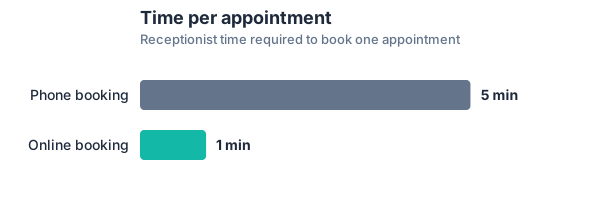
A single vet's caseload generates roughly 1,000-1,500 inbound calls per month – bookings, confirmations, follow-ups, and enquiries combined. At 5 minutes each, that's 80-125 hours of labour per vet. Even at the lower end, that's half a full-time employee dedicated solely to managing phone traffic from one clinician.
For a three-vet practice with two receptionists, the maths is tight. Your front desk is structurally stretched before anyone picks up the phone.
The average UK veterinary receptionist earns around £24,000 per year, or roughly £12 per hour. With employer's NI, pension contributions, and training costs, the fully burdened rate approaches £15-16 per hour. That means phone-based scheduling costs approximately £1,500-2,000 per month per vet in pure administrative labour.
The calls you're not answering
The most expensive phone call is the one that goes to voicemail.
Data shows that 25-30% of calls to small and medium veterinary practices go unanswered. When a potential new client hits a busy signal or voicemail, 68% will not call back – they'll simply call the next practice on Google.
UK clients typically spend around £600 per year on veterinary care, with an average relationship lasting 4-6 years. That puts the lifetime value of a single client relationship at £2,400-£3,600 – and significantly more for a new puppy or kitten owner who stays with you for the pet's full lifespan.
If your practice misses just five new client calls a month, the long-term revenue impact runs into tens of thousands annually.
The UK veterinary market has grown significantly – from £5 billion in 2021 to £6.3 billion in 2023 – but that growth has been driven largely by fee increases rather than patient volume. In this environment, every missed call matters more than it used to.
No-shows: the perishable asset problem
An empty appointment slot is revenue that vanishes the moment the time passes. The industry average no-show rate sits around 11%. For a UK practice turning over £600,000 annually, that's £66,000 in capacity that evaporates each year.
Phone-based appointments rely on manual confirmation calls – calls that clients screen or ignore. Automated text and email reminders, combined with deposit requirements at booking, can reduce no-shows by up to 90%.
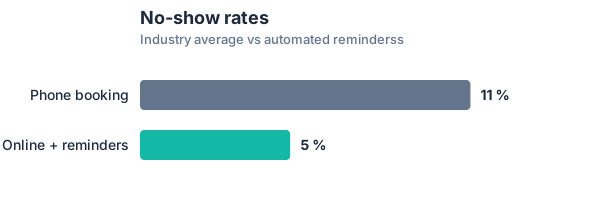
The difference between an 11% no-show rate and a 5% rate isn't marginal. For a mid-sized practice, it's £36,000 in recaptured revenue that requires no additional marketing or hiring.
What your clients actually expect
Millennials and Gen Z now make up 46% of pet owners. These cohorts book flights, order dinner, and schedule GP appointments without speaking to anyone. When they encounter a phone-only veterinary practice, they experience friction – and friction drives them elsewhere.
The same MWI research shows that 78% of human healthcare providers now offer self-service scheduling. Your clients already expect this from their own doctors. The inability to book online is no longer viewed as a neutral feature – it's increasingly seen as a service failure, equivalent to a shop not accepting card payments.
When practices implement online booking, 35% of appointments are scheduled after business hours. If your practice is only "open for business" when the phones are answered, you're locking out over a third of potential demand. That's not hypothetical demand, either – these are people actively trying to book while your phone lines are dark.
Client satisfaction data reinforces this shift. 86% of practices report positive feedback from clients regarding online booking options. In a low-volume environment where patient visits are declining industry-wide, retention becomes the primary growth engine. A client who remembers that "it's a hassle to call the vet" is less likely to book that dental cleaning than one who knows they can sort it in two minutes on their phone.
The burnout factory at your front desk
Turnover in UK veterinary practices can reach as high as 30% – and reception roles often see the highest churn. The profession is known for its long hours and high-pressure environment, which has contributed to significant retention challenges.
The primary driver is what researchers call "tele-pressure": the cognitive load of managing constantly ringing phones while serving clients in the lobby. This chronic multitasking increases errors and accelerates burnout.
Replacing a receptionist costs roughly 66% of their annual salary – around £16,000 when you factor in recruitment, training, and the productivity ramp-up period. If reducing phone volume prevents just one resignation per year, the return on that investment alone is substantial.
The phone also serves as a vector for client frustration. When someone has been on hold for five minutes, the receptionist becomes the target. Online booking removes your team from that adversarial position entirely – the website simply shows "no availability" without anyone having to personally deliver bad news.
The efficiency comparison
When clients book online, they perform the calendar search and data entry themselves. For the practice, the workflow shifts from entering data to reviewing it. That review process takes less than a minute per appointment, compared to nearly six minutes for a phone call.
Practices using online booking report saving between five minutes and two hours per day in administrative time per team member. A practice that moves 30% of appointments online reclaims roughly 50 hours of labour per month – time that can go toward client education, callbacks, or simply reducing overtime.
| Metric | Phone booking | Online booking |
|---|---|---|
| Time per appointment | ~5 minutes | <1 minute |
| Availability | Business hours only | 24/7 |
| No-show rate | ~11% | ~5% with automated reminders |
| Data entry errors | Higher (transcription) | Lower (client-entered) |
| Interruptions | Constant | Batch processing |
The hidden revenue leakage
Manual workflows create another cost that rarely appears on a P&L: missed charges. When receptionists are rushed, they may book an appointment without associating the correct fee codes.
Industry data suggests approximately 17% of diagnostic tests go unbilled in veterinary practices. Integrated scheduling systems can link appointment types to invoice templates automatically – a "Senior Wellness Exam" booking triggers an invoice pre-populated with the exam fee, blood panel, and urinalysis codes. This automation acts as a revenue safety net.
What this adds up to
For a three-vet UK practice turning over £700,000 annually, the financial impact breaks down roughly like this:
- Revenue recaptured from reduced no-shows: £30,000
- New clients captured through 24/7 booking: £25,000
- Labour efficiency savings: £10,000
- Reduced turnover costs: £8,000
Total annual impact: approximately £73,000
Even if these estimates are optimistic by half, the case for change is clear. The "free" phone system isn't free – it's a significant liability hiding in plain sight.
Practical steps
You don't need to eliminate phones overnight. The goal is a hybrid workflow that respects both your staff's capacity and your clients' preferences.
Audit your calls. Pull your phone logs. If you're missing more than 10% of inbound calls, you're losing revenue you could capture. Track when calls peak – many practices discover they're drowning between 8-10am and 4-6pm while midday is manageable.
Apply the 80/20 rule. Move routine appointments – vaccines, wellness checks, rechecks – to online booking. Keep phones for complex cases, euthanasia discussions, and situations that genuinely benefit from a human voice. The goal isn't to eliminate phone conversations; it's to reserve them for interactions where they add value.
Set guardrails. Modern scheduling systems let you enforce rules programmatically: block surgery times, require deposits for new clients, limit same-day bookings, ensure exotic patients only book with vets who see them. You maintain control of the calendar while eliminating the "tribal knowledge" problem where scheduling rules live only in experienced team members' heads.
Start with new clients. If you're nervous about the transition, begin by offering online booking only to new clients. They have no established habit of calling you, and they're the cohort most likely to expect digital access. Once you've refined the workflow, expand to existing clients.
Make it visible. Put the booking link prominently on your website – it should be the first thing someone sees on mobile. Update your hold message: "Did you know you can book your appointment right now on our website? No need to wait." Add QR codes in exam rooms so clients can schedule their next visit before they leave.
Track the transition. Monitor what percentage of appointments come through each channel. Practices that actively promote online booking typically see 25-40% adoption within the first few months. That's enough to meaningfully reduce phone pressure without forcing anyone to change who doesn't want to.
The telephone had a good run. But in 2025, it shouldn't be the primary gatekeeper to veterinary care.
If you're dealing with scheduling chaos at your practice, we're building something that might help – sign up below to hear when it's ready.
Get notified when VetPlanner launches